
Shape of Dreams Best Builds: v1.4 Meta & Traveler Guide
Discover the best builds in Shape of Dreams v1.4. In-depth meta loadouts, Memory synergies, and constellation paths for Mist, Aurena, Bismuth, Shell & Cetus.
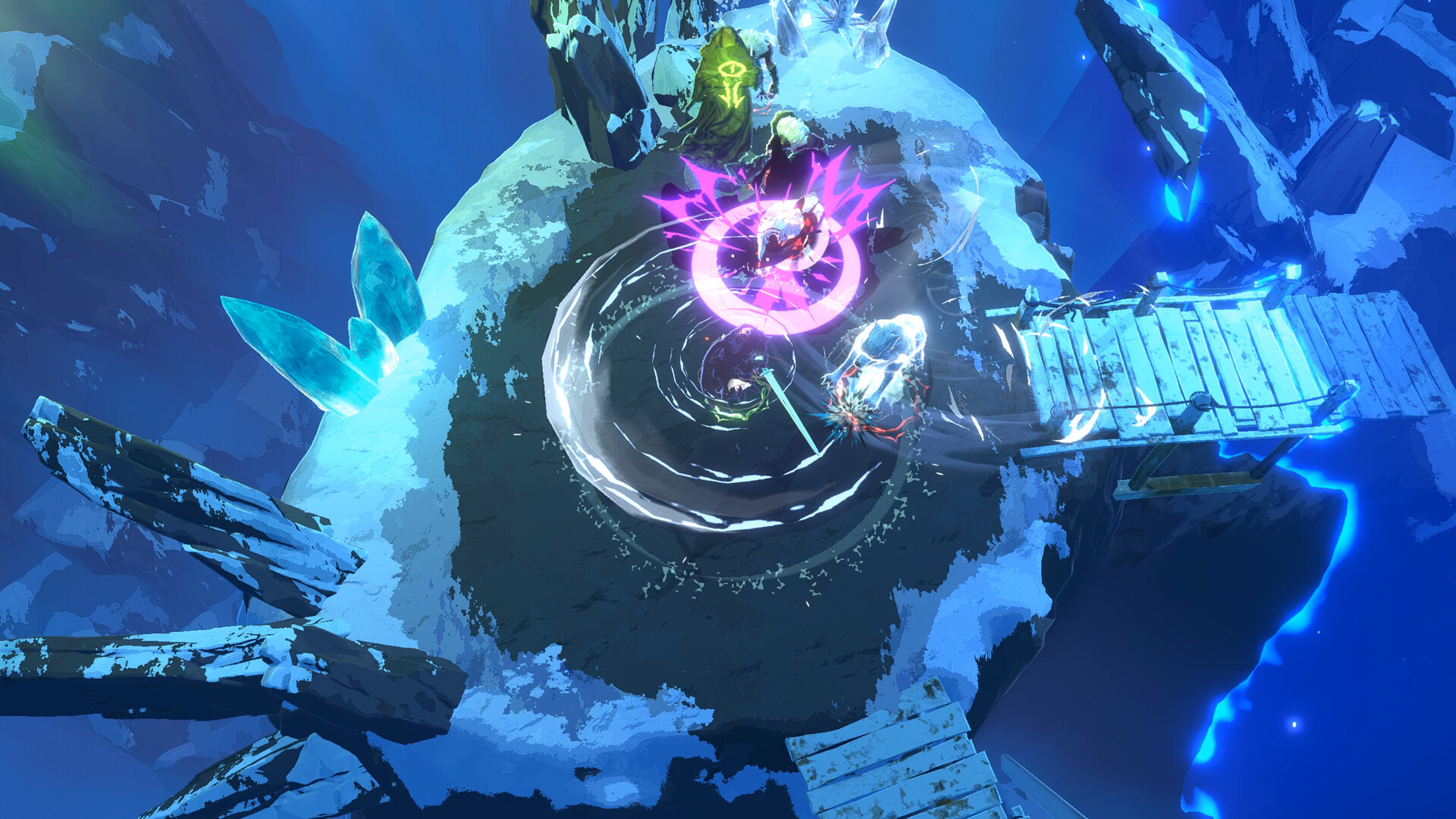
The best builds in Shape of Dreams v1.4 are Cetus Glacial Burst (S-tier crowd control & party shields), Shell Seven-Star Sword Wave (top boss DPS), and Mist Priorité Tempo Duelist. Each build pairs active Memories with socketed Essences like Inversion and Permafrost to maximize cooldown haste and survivability.
Building an effective loadout in Shape of Dreams means balancing your Traveler’s innate kit, up to four active Memories, several passive Essences, and the Flexible Stars you reveal on the Way of Stars. With the launch of the v1.4 Starless Path update, scaling moved toward Cold accumulation and Sword Wave archetypes that can survive the Heroic boss patterns added from Ominous Dream upward. This breakdown separates what the 1.4.0 patch notes actually document from what is still our own run reading, and labels the second category accordingly.
v1.4 Meta Builds & Traveler Tier List
While official patch notes do not publish raw win-rate spreadsheets, combat mechanics, scaling ceilings, and survivability profiles define distinct archetype performance tiers. For comprehensive character rankings across all 9 heroes, consult our Shape of Dreams Traveler Tier List. Below are the patch-note verified build architectures for every Traveler updated in v1.4.
9-Traveler Build Quick Jump: Cetus (Cold Burst) · Shell (Sword Wave) · Yubar (Supernova) · Mist (Priorité) · Lacerta (Barasus) · Vesper (Sacred Flame) · Nachia (Leaf Hounds) · Aurena (Lunar Healer) · Bismuth (Crossfire)
| Build | Traveler | Identity Memory Route | Documented Loop | Flexible Stars In v1.4 | Dedicated Guide |
|---|---|---|---|---|---|
| Cold Burst Warden | Cetus | Innate Identity Memory | Cold accumulation, Glaciers, Blizzard zones, shields | Not listed, new Traveler | View Build ↗ |
| Sword Wave Sustainer | Shell | Innate or Common Identity | Annihilation Stance, Sword Wave, Memory Haste | 7 | View Build ↗ |
| Supernova Astral Kiter | Yubar | Innate Identity Memory | Full Dodge charge resets on Supernova, heavy AP | 2 | View Build ↗ |
| Priorité Tempo | Mist | Innate Identity Memory | Fencing mobility: Lunge, Flèche, Parry plus Priorité | 2 | View Build ↗ |
| Barasus Ballistic Stagger | Lacerta | Innate Identity Memory | Barasus guaranteed knockback, Dirty Gunpowder AoE | 3 | View Build ↗ |
| Sacred Flame Vanguard | Vesper | Innate Identity Memory | Close-range heavy hammer damage holding enemies back | 1 | View Build ↗ |
| Sylvan Spirit Commander | Nachia | Innate Identity Memory | 200% AP scaling Leaf Hounds, 30 base hound Armor | 1 | View Build ↗ |
| Lunar Arcanum Healer | Aurena | Innate Identity Memory | Sacrificial life force conversion into shields & heals | 1 | View Build ↗ |
| Spellbook Crossfire | Bismuth | Innate Identity Memory | Swift movement with sustained ranged spell damage | 1 | View Build ↗ |
Cetus Glacial Frost Meta Build
Cetus is the flagship addition of v1.4 The Starless Path, and the only new Traveler the patch notes describe mechanically. He is a ranged warrior who accumulates Cold inside his own body, spends that accumulated Cold for bursts of damage, creates massive Glaciers and icy zones to slow enemy movement, and grants shields to himself and his allies. That combination makes him the rare Traveler who can hold a lane in a Heroic boss fight without a second defensive build around him.
- Dedicated Loadout: Cetus Full Build Guide ↗ · Open Cetus in Planner ↗
6-Step Build Architecture
- Traveler & Core: Cetus, unlocked by digging through Piles of Snow. His documented identity is Cold accumulation plus shield generation, so build around staying in the fight rather than disengaging.
- Memory 1 (Damage): a Cold scaling Memory socketed with Essence of Inversion. Read the v1.4 change carefully: the cooldown penalty Inversion applies is now fixed at 20% and no longer grows with quality, providing predictable timing tradeoffs.
- Memory 2 (Defense): Permafrost. Since v1.4 its Shields no longer stack when the same Permafrost is cast repeatedly, while its Armor stacks up to 3 times, and that limit is applied per Memory rather than across the whole set.
- Memory 3 (Control): lean on Cetus’s own Glaciers and Blizzard zones for area denial, then socket Essence of Control to reinforce freeze uptime.
- Memory 4 (Finish): a burst option that cashes out accumulated Cold while the target is rooted. Cold Affinity is the documented Cold damage reduction line to weigh against it, and Essence of the Abyss is documented as a conversion effect that turns damage into Light damage, the cleanest route if you want mixed procs to read as one type.
- Stars: Cetus is a new Traveler, introduced with v1.4. Prioritize core defense and elemental mastery nodes along your initial progression runs.
Tactical Combat Rotation
Use Blizzard zones first, not second: the documented purpose of the glaciers and icy zones is to control enemy movement, and everything else in the kit assumes the target is standing somewhere you chose. Spend accumulated Cold on the burst window that follows a root. Keep your shield rotation on the ally who is out of position, because the healing budget of a party is smaller than the positioning budget. If you are taking Shield damage instead of Armor damage, you are face-tanking a build that v1.4 explicitly rebalanced away from that plan.
2. Shell: The Seven-Star Sword Wave Build (Seven New Flexible Stars)
Shell is the clearest long-fight candidate on the notes alone, for players whose glass-cannon builds die to the new Heroic boss patterns. The manufactured assassin received seven new Flexible Stars, the largest grant in the update, plus three dedicated new Memories, Death Mark, Deception and Scar of the Wind. The documented spine of the kit is Annihilation Stance, and v1.4 reworked exactly how that stance shares the screen with the rest of your bar.
- Dedicated Loadout: Shell Full Build Guide ↗ · Open Shell in Planner ↗
6-Step Build Architecture
- Traveler & Core: Shell, whose whole kit is built around Annihilation Stance uptime. Seven new Flexible Stars is what turns that flexibility into a real build instead of a novelty.
- Memory 1 (Stance): Annihilation Stance. v1.4 removed its maximum Dodge charge and Memory Haste bonuses, but you can now cast other Memories during its duration, and casting the stance itself restores a Dodge charge.
- Memory 2 (Charge engine): Chained Bloodlust, which v1.4 gave a new effect: during Annihilation Stance, each Basic Attack or Sword Wave hit charges all Ultimates by 0.5%.
- Memory 3 (Tempo): Frenzied Blade Dance, which cuts Sword Wave damage and range hard in exchange for two extra maximum Dodge charges and Memory Haste that climbs permanently every time you defeat a boss.
- Memory 4 (Safety): Controlled Madness, reworked with a shorter cooldown and duration once its Dodge bonuses were folded into the base Annihilation Stance changes.
- Stars & Essences: allocate the seven Flexible Stars across the stance window you actually live in, and experiment with the eight new Essences introduced in v1.4 to augment your sword wave trajectory and burst windows.
Tactical Combat Rotation
Treat Annihilation Stance as uptime, not as a panic button, because v1.4 is the first patch where casting the rest of your bar inside the stance is legal. Chained Bloodlust only charges Ultimates while the stance is active, so every second of the window you skip is a second of Ultimate you never get back. Frenzied Blade Dance shrinks Sword Wave range by 80% and its damage by 60%, a trade that is only free if you can land the wave from the safe side of a telegraph, which is exactly what the extra Dodge charges buy. Against Heroic boss patterns, the permanent Memory Haste step you take on each boss kill is why Shell gets stronger the deeper into a run you get.
3. Vesper: Sacred Flame Pressure (One New Flexible Star)
Vesper remains the favored choice for players who want to end boss phases fast, because the official description puts him in the enemy’s face: the leader of the Order of the Sacred Flame fights at close range, holding back enemies while dealing heavy damage. That role text is the whole of what the official sources commit to, so the numbers below stay deliberately generic.
- Dedicated Loadout: Vesper Full Build Guide ↗ · Open Vesper in Planner ↗
6-Step Build Architecture
- Traveler & Core: Vesper, the roster’s close-range inquisitor. Everything below assumes the heavy melee identity the official description gives him, anchored by his character Memories Cruel Sun and Discipline.
- Memory 1 (Single target): Cruel Sun, his charged hammer slam, socketed with Essence of Liberty, one of the eight Essences v1.4 added to the pool.
- Memory 2 (Mobility): a gap-closing Movement Memory paired with Essence of Slipperiness, one of the eight names the 1.4 note lists while printing an effect for none of them.
- Memory 3 (Wave clear): an area option that packs elites into range of the hammer slam in step 2, with Supersymmetry the v1.4 name worth testing there. The note prints that one bare, without an Essence prefix.
- Memory 4 (Execution): one of his Ultimate slots, El’s Sanctuary or Baptism of the Sun, spent on the window you banked earlier. If you socket Essence of Inversion here, remember its penalty is now a fixed 20% that no longer scales with quality, so a high quality Inversion is cheaper to carry than it used to be.
- Stars: Vesper received one new Flexible Star in v1.4, the smallest grant on the roster, so his constellation rewards one clean win condition rather than a hybrid.
4. Mist: Priorité Tempo Duelist (Two New Flexible Stars)
Mist is the roster’s agile noble duelist, a fencer of House Verdesilver whose kit of Lunge, Flèche and Parry turns footwork into damage, while the Fire and Burn half of her damage profile is carried by the Memories you slot into her board. v1.4 pushed her in the right direction: Lunge got a shorter cooldown, and Astrid’s Masterpiece - Priorité lost its cooldown altogether while its base damage rose from 35% to 45% of Attack Damage.
- Dedicated Loadout: Mist Full Build Guide ↗ · Open Mist in Planner ↗
6-Step Build Architecture
- Traveler & Core: Mist, tempo first and sustain second. Two reworks in a single patch are the clearest signal in v1.4 that the duelist was underperforming at higher difficulty tiers.
- Memory 1 (Opener): Astrid’s Masterpiece - Priorité, whose cooldown v1.4 removed, turning it into a repeatable opener. Its movement speed bonus moved from a flat 25% to 10% plus 5% per level, so it now rewards leveling rather than casting.
- Memory 2 (Storm): an area option that keeps a Burn tick running between fence exchanges, which is where the loadout actually pays.
- Memory 3 (Mobility): Lunge, tightened from a 7s cooldown to 6s in v1.4. In a Mist build the difference is between finishing a room and being caught in the next one.
- Memory 4 (Amplify): Beam of Balance, reworked upward in v1.4 to 460% attack power damage per second and 200% attack power healing per second with faster beam tracking, paid for with a shorter 6s duration.
- Stars: Mist received two new Flexible Stars in v1.4. Allocate points into your most frequently triggered element to maximize uptime across boss fights.
5. Bismuth: Swift Spellbook Crossfire (Ranged Artillery)
Bismuth is the premier sustained ranged magic dealer in Shape of Dreams. Unlocked via the Once Upon a Time sprint achievement, his combat rhythm turns high move speed and continuous spell-cycling into overwhelming screen-wide pressure.
- Dedicated Loadout: Bismuth Full Build Guide ↗ · Open Bismuth in Planner ↗
6-Step Build Architecture
- Traveler & Core: Bismuth, sprint velocity and continuous ranged spell damage. Leverage high base move speed to maintain spacing during dense elite waves.
- Memory 1 (Primary Spell): Magic Missile or Elemental Orb, socketed with Essence of Slipperiness to ensure swift cast animations without interrupting your kite line.
- Memory 2 (Mana & CDR): Socket Essence of Efficiency to reduce skill mana costs, enabling unbroken cast chains during prolonged boss encounters.
- Memory 3 (AoE Burst): Arcane Burst with Essence of Supersymmetry for secondary cascade damage across clustered mob packs.
- Memory 4 (Finisher): Cataclysm or Comet Fall socketed with Essence of Inversion to convert elemental affinity and trigger burst windows.
- Stars: Invest in elemental penetration and cooldown reduction along the constellation tree.
6. Aurena: Lunar Arcanum Healer (Party Shield Engine)
Aurena represents the ultimate hybrid support and offensive caster in v1.4. Her unique health-conversion mechanics allow her to trade current life force into massive party-wide shields and radiant beams.
- Dedicated Loadout: Aurena Full Build Guide ↗ · Open Aurena in Planner ↗
6-Step Build Architecture
- Traveler & Core: Aurena, sacrificial life conversion into shields and sustained radiant heals for the entire fireteam.
- Memory 1 (Core Beam): Lunar Ray, channeling consistent Light damage that ramps in intensity over continuous beam contact.
- Memory 2 (Shield Burst): Aegis of Radiance, socketed with Essence of Clemency for instant overshields when allies dip below 50% vitality.
- Memory 3 (Zone Sustain): Sanctuary Ward, dropping an area blessing that cleanses debuffs and provides health regeneration ticks.
- Memory 4 (Solar Discharge): Solar Flare, converting stored radiant charges into an area blind and execute window.
- Stars: Focus on healing amplification and shield duration on the Way of Stars.
7. Yubar: Supernova Astral Kiter (High AP Mobility)
Yubar is the master of gravitational mechanics and cosmic energy. His flagship v1.4 loop resets all Dodge charges upon casting Supernova, granting him unparalleled evasive mobility.
- Dedicated Loadout: Yubar Full Build Guide ↗ · Open Yubar in Planner ↗
6-Step Build Architecture
- Traveler & Core: Yubar, high Ability Power (AP) scaling paired with instant dash-reset mechanics.
- Memory 1 (Supernova): Innate Supernova, triggering screen-wide gravity pulls while immediately restoring all expended Dodge charges.
- Memory 2 (Starlight Bolt): Rapid AP projectiles socketed with Essence of Precision for amplified critical spell strikes.
- Memory 3 (Event Horizon): Slowing singularity field to cluster elite foes directly into the Supernova epicenter.
- Memory 4 (Astral Shift): Secondary blink ensuring Yubar never gets cornered against wall geometry.
- Stars: Allocate into Astral magic amplification and cooldown recovery nodes.
8. Nachia: Sylvan Spirit Summoner (Hound Swarm)
Nachia commands the forces of the living forest. In v1.4, her Leaf Hounds feature an impressive 200% AP scaling alongside 30 base hound Armor, turning her summoned pack into formidable frontline tanks.
- Dedicated Loadout: Nachia Full Build Guide ↗ · Open Nachia in Planner ↗
6-Step Build Architecture
- Traveler & Core: Nachia, minion swarm commander commanding autonomous wood spirits and floral constructs.
- Memory 1 (Summon Pack): Leaf Hounds, scaling off 200% Ability Power with 30 base Armor to tank elite boss projectiles.
- Memory 2 (Briar Brambles): Rooting vines that entangle approaching targets, keeping them locked in place while the hound pack surrounds them.
- Memory 3 (Spore Cloud): Lingering Poison AoE weakening target resistances.
- Memory 4 (Sylvan Roar): Pack frenzy buff increasing minion attack speed and granting life leech.
- Stars: Invest in minion survivability, total summon count, and Nature elemental nodes.
9. Lacerta: Heavy Sniper Artillery (Barasus Stagger)
Lacerta commands high-caliber ordnance from extreme range. Her Barasus rifle delivers guaranteed knockbacks that keep heavyweight champions at bay.
- Dedicated Loadout: Lacerta Full Build Guide ↗ · Open Lacerta in Planner ↗
6-Step Build Architecture
- Traveler & Core: Lacerta, long-distance ballistic suppression relying on line-of-sight and armor-piercing kinetic rounds.
- Memory 1 (Heavy Shot): Barasus, delivering guaranteed target stagger and knockback.
- Memory 2 (Scatter Ordinance): Dirty Gunpowder, igniting wide-cone shrapnel that clears creeping swarms.
- Memory 3 (Tactical Roll): Evasive disengage that automatically reloads your primary chamber.
- Memory 4 (Orbital Calldown): Artillery strike targeting entrenched elite groups.
- Stars: Prioritize physical damage scaling, kinetic penetration, and maximum engagement range.
Act Boss Matchups & Build Counters
Taking your v1.4 build into high-difficulty encounters? Consult our dedicated Shape of Dreams Boss Guide for Chamber of Jonas mechanics, Mirror of Remorse phase transitions, and Polaris true ending strategies.
- Chamber of Jonas (Act 2): Favors Cetus Cold zone control and Lacerta long-range sniper artillery to bypass room-wide hazards.
- Mirror of Remorse (Act 3): High-burst DPS builds like Shell Seven-Star Sword Wave and Bismuth Spellbook Crossfire can break mirror duplicates before they overwhelm the arena.
- Polaris (True Ending Secret Boss): Requires extreme mobility like Yubar Dodge-Reset and Mist Priorité Parry to survive bullet-hell star patterns.
Essential Theorycrafting Principles in v1.4
Three rules decide most runs once you are at or above Ominous Dream difficulty.
First, read the Essence of Inversion change the right way. Before v1.4 the cooldown increase Inversion applies grew with the Essence’s quality; from v1.4 it is fixed at 20% and no longer scales. That is a cheaper downside, not a cooldown reduction, so take the socket for whatever else it gives you and budget the flat 20% as a permanent tax.
Second, respect documented stacking caps instead of invented soft caps. v1.4 is full of hard ceilings: Permafrost Shields no longer stack at all while its Armor caps at 3 stacks, applied separately to each Permafrost Memory; Mental Corruption damage ticks are capped at 8 per second, with any extra stacks folded into damage per tick instead of frequency; and from the second loop onward the number of monsters alive at once hits a fixed cap rather than growing indefinitely.
Third, plan for co-op scaling before you copy a solo build into a four player lobby. The store page documents up to 4-player co-op where different Travelers’ abilities combine, and the v1.4 notes add that enemies spawn faster as the number of players increases, with a fixed cap on monsters alive at once from the second loop onward. Neither source publishes a per-player enemy health multiplier, so no such number appears here. A squad of Cetus (Cold control and shields), Bismuth (swift sustained ranged damage), Mist (parry-centred mobility) and Vesper (close-range heavy pressure) covers control, wave clear and execution without two Travelers fighting over the same job.
Frequently Asked Questions
Which Shape of Dreams Traveler did v1.4 change the most?
Shell, on the developers' own numbers: seven new Flexible Stars, three dedicated new Memories (Death Mark, Deception and Scar of the Wind) and a rework of Annihilation Stance itself. Cetus is the only entirely new Traveler the patch adds.
What does Shell's v1.4 kit actually do?
Shell, officially a manufactured assassin, received three new Memories in v1.4, Death Mark, Deception and Scar of the Wind, plus seven Flexible Stars. During Annihilation Stance you can now cast other Memories, and casting the Stance restores a Dodge charge.
Can you change Memories during a run?
Yes. Six new Common Identity Memories let you substitute or augment your Traveler's innate Identity Memory during a run, which is the documented way to pivot a build mid-run.